

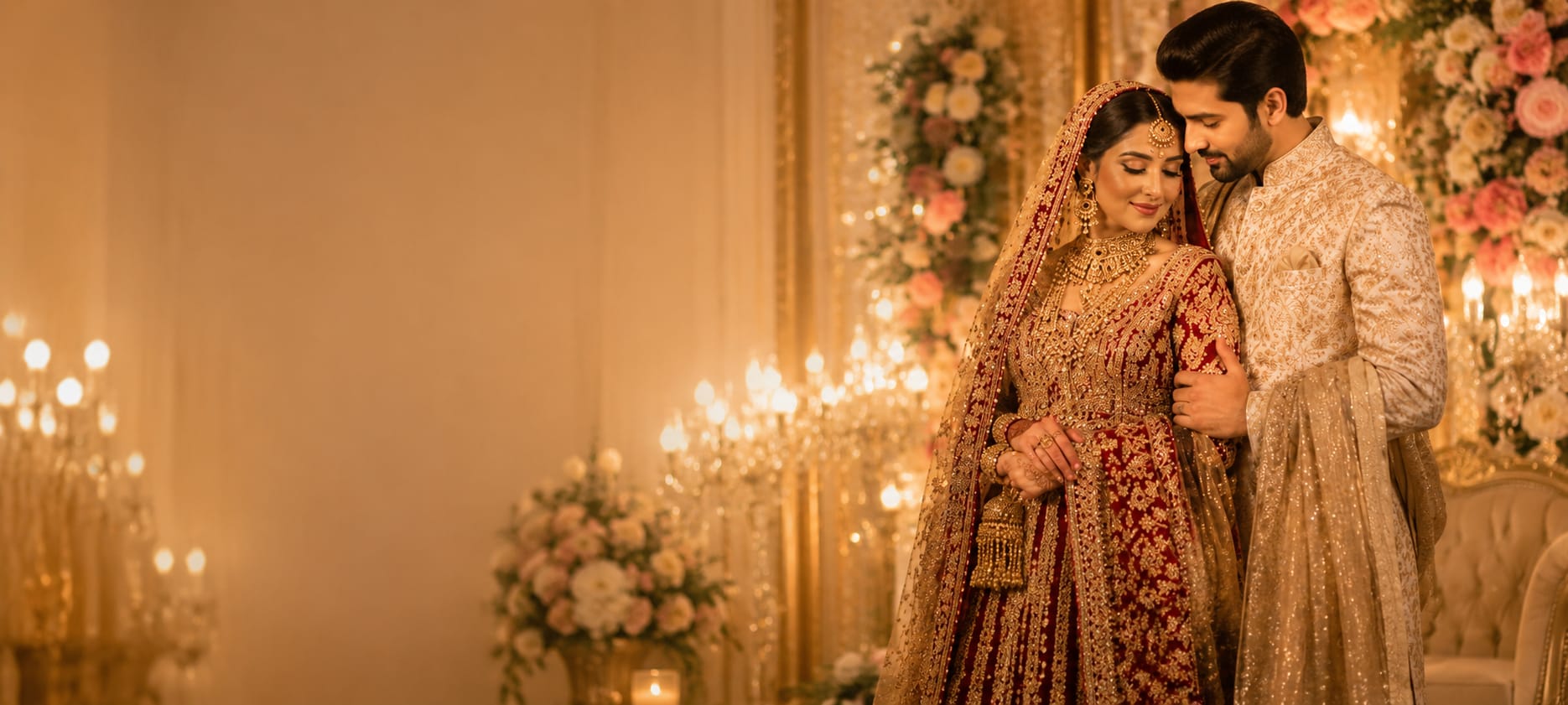
How to Choose Your Bridal Attire & Jewellery: A Practical Guide for Pakistani Weddings
Your bridal outfit is photographed more than anything else at your wedding. Years later, it's the lehenga, the jhoomar, the way the dupatta was set — that's what people remember. Yet most brides in Pakistan start shopping with excitement and end up overwhelmed, juggling designer lawns in Lahore, jewellers in Karachi's Tariq Road, and a khala who insists on "sirf gold, beta."
This guide breaks the decision down so you can shop with clarity, not chaos.
Start With the Event, Not the Outfit
Every function has its own personality, and your attire should match it.
For the Baraat, tradition still rules. Deep reds, maroons, and rust tones in a lehenga or gharara remain the classic choice, and for good reason — they photograph beautifully under wedding lighting. If red feels too expected, consider a deep magenta or burnt orange with traditional zardozi work.
The Walima is where you can breathe. Pastels, ivories, and soft golds in a maxi or saree feel elegant without competing with your Baraat look. Lighter fabrics also mean you'll actually enjoy the dinner.
For the Mehndi, comfort wins. You'll be dancing, sitting on the floor, and getting henna applied. A yellow or green gharara in a lighter fabric lets you move — heavy formals here are a mistake brides regret by 9 pm.
Lehenga, Gharara, or Maxi? Match the Silhouette to You
Don't choose based on Instagram alone.
A lehenga flatters most body types and is easiest to manage. A gharara carries old-world Lucknowi charm but is heavier and demands confident walking — practice at home in it. A maxi or gown suits modern Walima looks and taller brides especially well.
One Honest Tip on Designer vs. Local
A designer replica or a well-made outfit from a trusted local boutique in Liberty Market, Gulf Shopping Mall, or Zainab Market can look stunning at a third of the price. Spend where the camera lingers: the dupatta work and the blouse. Save on the parts that hide under it.
Jewellery: Gold, Artificial, or a Smart Mix?
With gold prices where they are, most families now blend both — and nobody can tell in photos.
Go real gold for pieces you'll wear again: a delicate set for the Walima, bangles, a ring. Go high-quality artificial (kundan, polki-style, or gold-plated) for the heavy Baraat set — the matha patti, jhoomar, and statement rani haar that you'll realistically wear once.
Buy jewellery after the outfit is finalised. Take a fabric swatch or clear photos to the jeweller so the stones match your embroidery, not clash with it.
Fittings and Timing: The Part Everyone Underestimates
Order your bridal outfit at least three to four months before the wedding — designer pieces often need longer during peak season (November to February). Schedule your final fitting two weeks out, and wear your actual wedding shoes to it. Hemlines depend on heels.
One last thing: sit down in the outfit during the trial. You'll spend hours on a stage. If you can't sit comfortably, it needs altering.
Your Look, Your Rules
The best bridal look isn't the heaviest or the most expensive — it's the one where you look like yourself on your happiest day. Trust your instinct over trends, and give yourself time to shop without pressure.
For more practical guides on venues, budgets, and every function in between, explore the wedding planning resources at ShaadiGhar — your companion from mehndi to rukhsati.